
This is a div block with a Webflow interaction that will be triggered when the heading is in the view.
- (Here's a quick overview of the product ).
- I founded Opensense six years ago to solve a problem I noticed lots of people having.
- Managing email signatures was painful and hard.
- Yet everyone had to manage email signatures.
- We launched in a tiny office in San Francisco - three of us and my corgi Lola.

I founded Opensense six years ago to solve a problem I noticed lots of people having. Managing email signatures was painful and hard. Yet everyone had to manage email signatures. We launched in a tiny office in San Francisco - three of us and my corgi Lola. I had run security and application initiatives at major organizations, launched and run a security startups, and been a security architect at Bloomberg. Opensense was new turf and it was exciting. I was building something that everyone could relate to. When I explained what we were doing, people nodded their heads in vehement agreement.

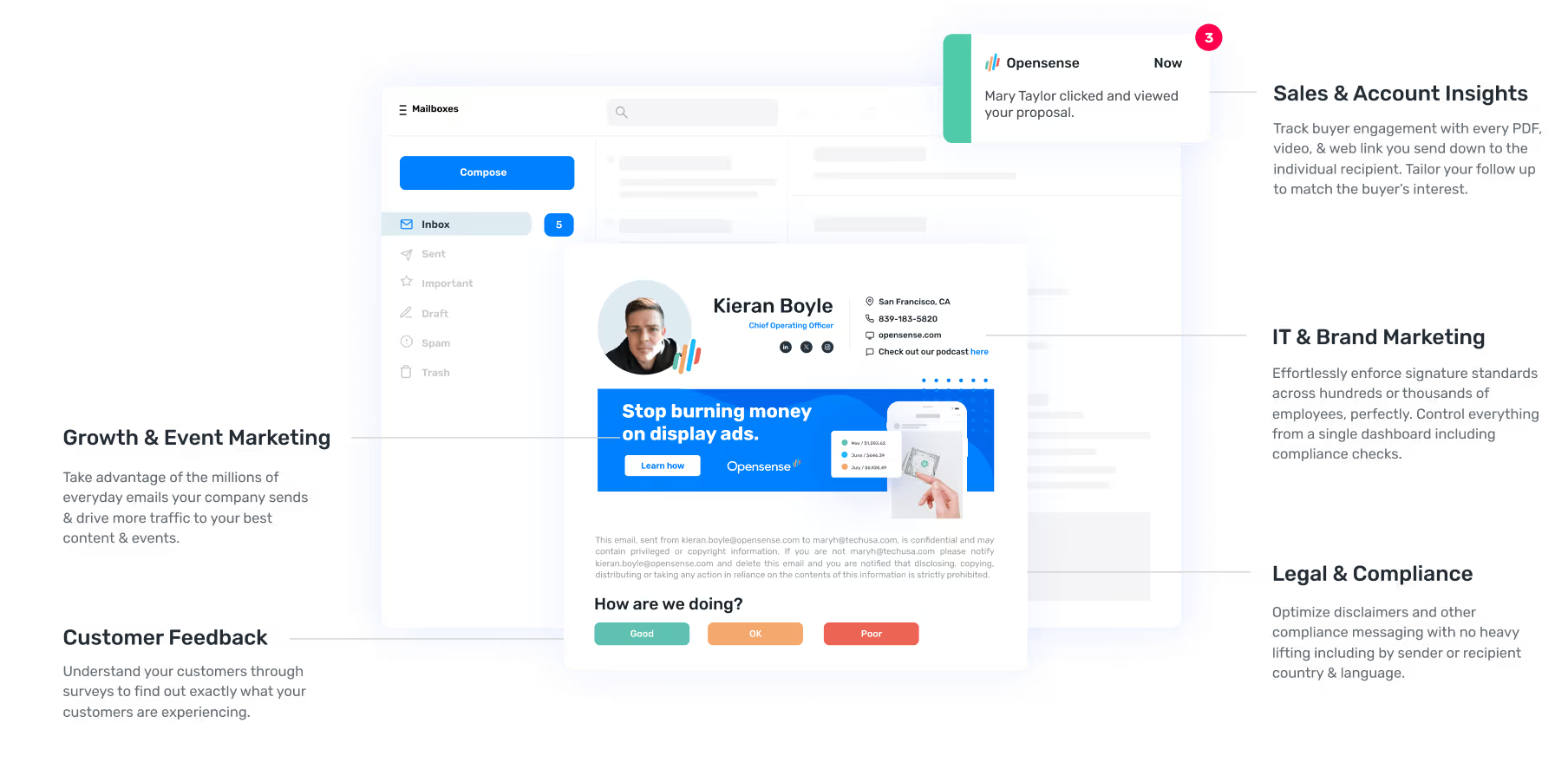
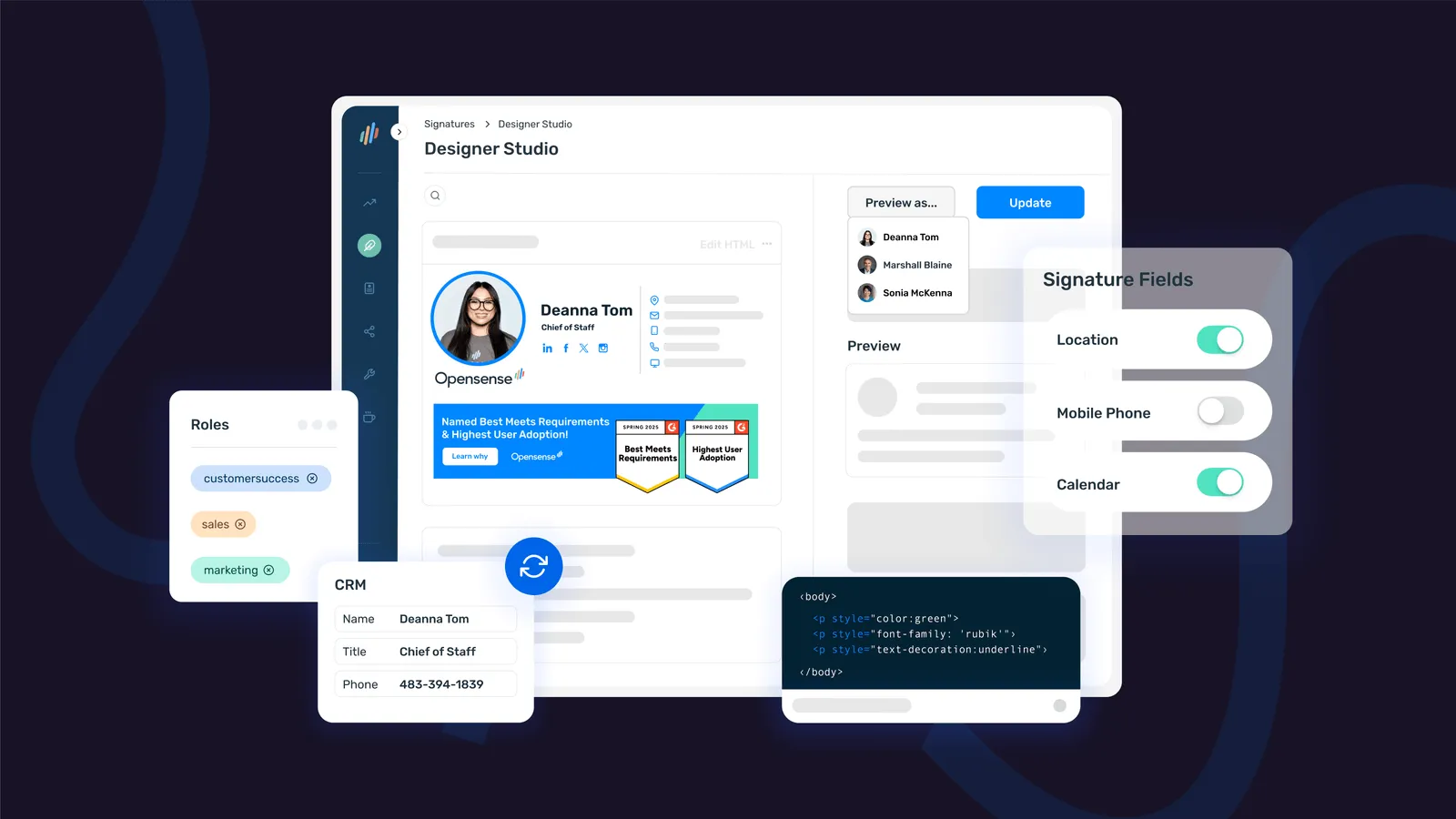
Flash forward to today. Opensense is now a thriving, fast-growing platform that not only manages email signatures but gives companies cutting edge ABM capabilities in their email signature banners. We make life easier and better not only for marketing and brand people but for IT people (who hate managing signatures and love our compliance and disclaimers capabilities) and sales people (who love our multi-recipient email analytics). (Here's a quick overview of the product).
Today we now have over 150,000 users and are rapidly closing in on 200,000! We have become one of the largest providers of email signature management in the industry. Opensense is installed an in-use at 3 of the 5 largest publicly traded marketing technology companies on the planet. We count five unicorn startups as customers; the office joke is that when a B2B sales or marketing company goes onto Opensense, that means they are destined for unicorn status.
We integrate with Adobe, Marketo, Salesforce and most of the other major marketing automation systems. Our banners helped our friends at Outreach.io boost their paid event attendance by 15% and helped renewables giant EDF boost Webinar attendance by 20% and allow them to eliminate chunks of their print ad spend. We are employed by some of the biggest brands in education, technology, and real estate (the National Association of REALTORS is one of our faves).
I was heads down working hard and didn’t notice when we crossed the 100,000 user market six months back. None of us did, to be honest. We pride ourselves on stellar customers service and being super customer responsive in adding features and capabilities. For example, we added a nifty image cropping feature that masks GSuite team directory images in the shape of a company logo outline for Outreach.io (it’s now a generally available feature). We added internal email marketing capabilities for another major customer to allow them to integrate with Workday and use internal emails and banners to create a powerful marketing channel for education and HR functions.
We’re not stopping there. The winds are at our backs. More and more people are realizing that email signatures are a tremendous opportunity; the average 100 person company sends nearly 1 million emails a year. That may be more people than are visiting that a company website, and it’s a better targeted list, to boot.
I told my co-founder Bobby Narang (who brought our user growth number to my attention, that 160,000 is cool but you know what’s really cool? 1 million. Or maybe 100 million. I asked him to remind me when we cross that threshold. Until then, we’ll keep doing what we are doing, focusing on product and customers and delivering the best experience in the email signature industry that we possibly can.