This is a div block with a Webflow interaction that will be triggered when the heading is in the view.
- Most financial services firms govern their campaigns carefully and leave their highest-volume client touchpoint, employee email, completely uncontrolled.
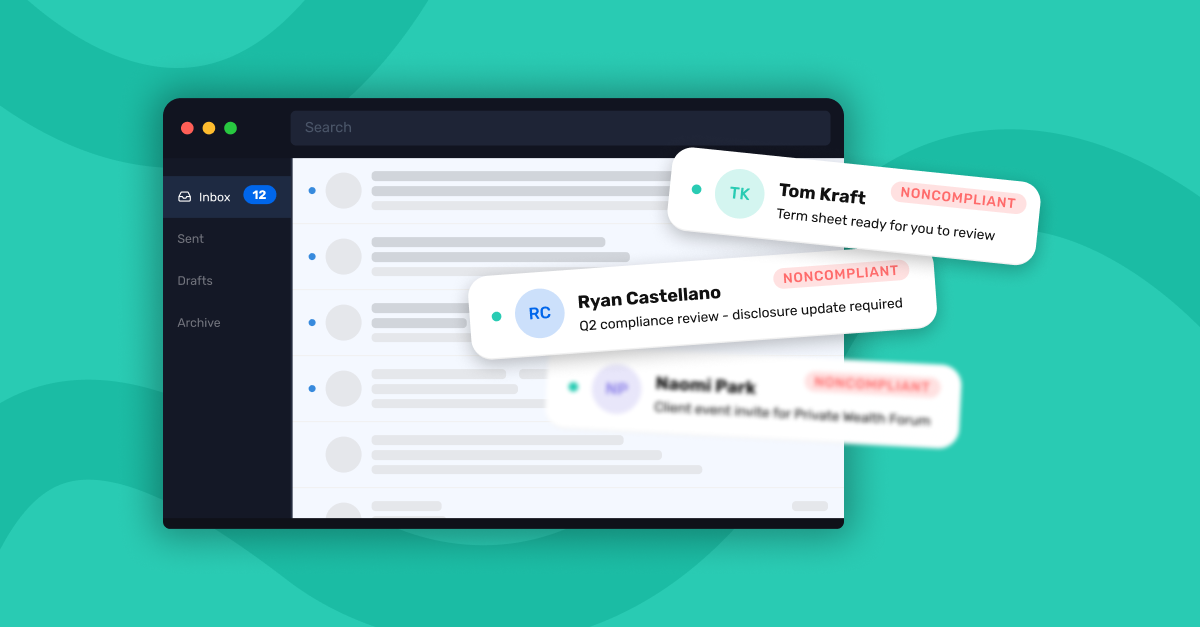
- When compliance and brand consistency break down at the signature level, there's no clean answer for regulators asking about CAN-SPAM or FINRA posture across employee-initiated communications.
- The institutions getting ahead of this are treating employee email like every other governed channel: with infrastructure, standards, and a clear owner.

Your biggest compliance exposure is not in the campaigns you review. It is in the millions of employee emails you never see.
Why Employee Email Is Your Highest-Volume Ungoverned Channel
Marketing and legal teams in financial services have spent years building governance around the channels they can see: reviewed ads, approved campaign copy, documented disclosures. Everyday employee email got none of that, despite running at higher volume than any campaign and touching every client relationship the firm has.
An advisor sends thirty-odd emails a day, and every one of them is supposed to carry a standardized disclaimer and a working unsubscribe link. Most don't. Nobody notices, because the only people who see an advisor's signature are the clients receiving it, and they have no particular reason to report that the opt-out link is dead.
The problem is not that institutions don't know. It is that nothing was ever built to fix it.
How Manual Signature Management Fails at Scale
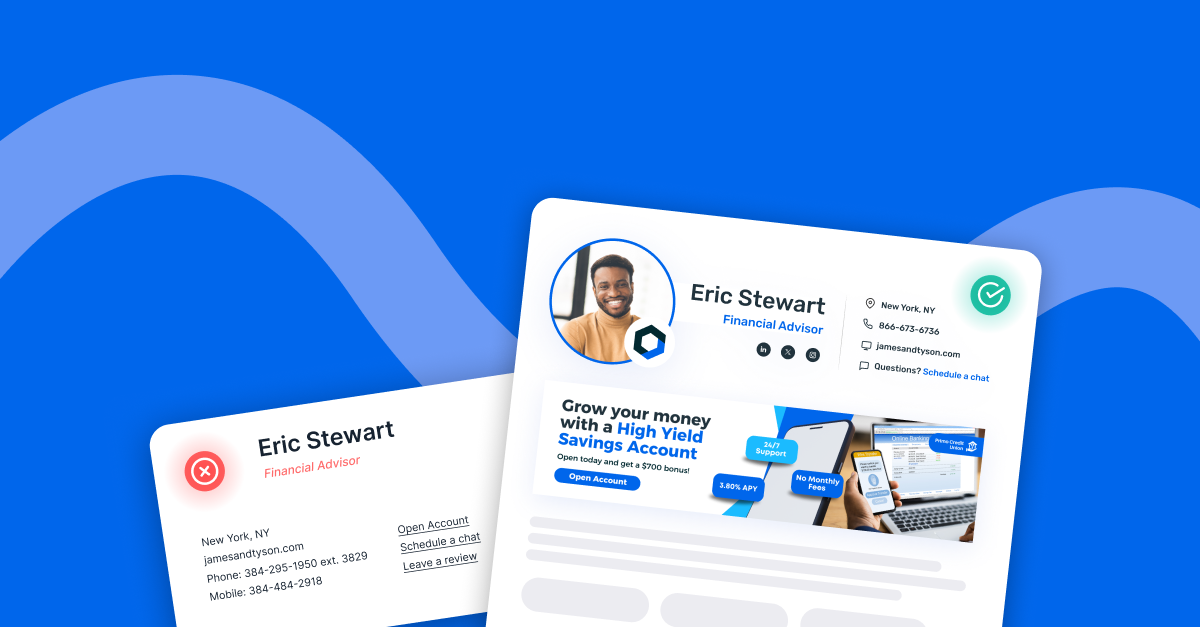
The traditional approach is manual: IT maintains templates, compliance reviews them periodically, employees update their own. Signatures drift. Disclaimers get dropped. Opt-out links break. When a regulator asks for documentation of your CAN-SPAM or FINRA posture across employee-initiated communications, there is no clean answer available.
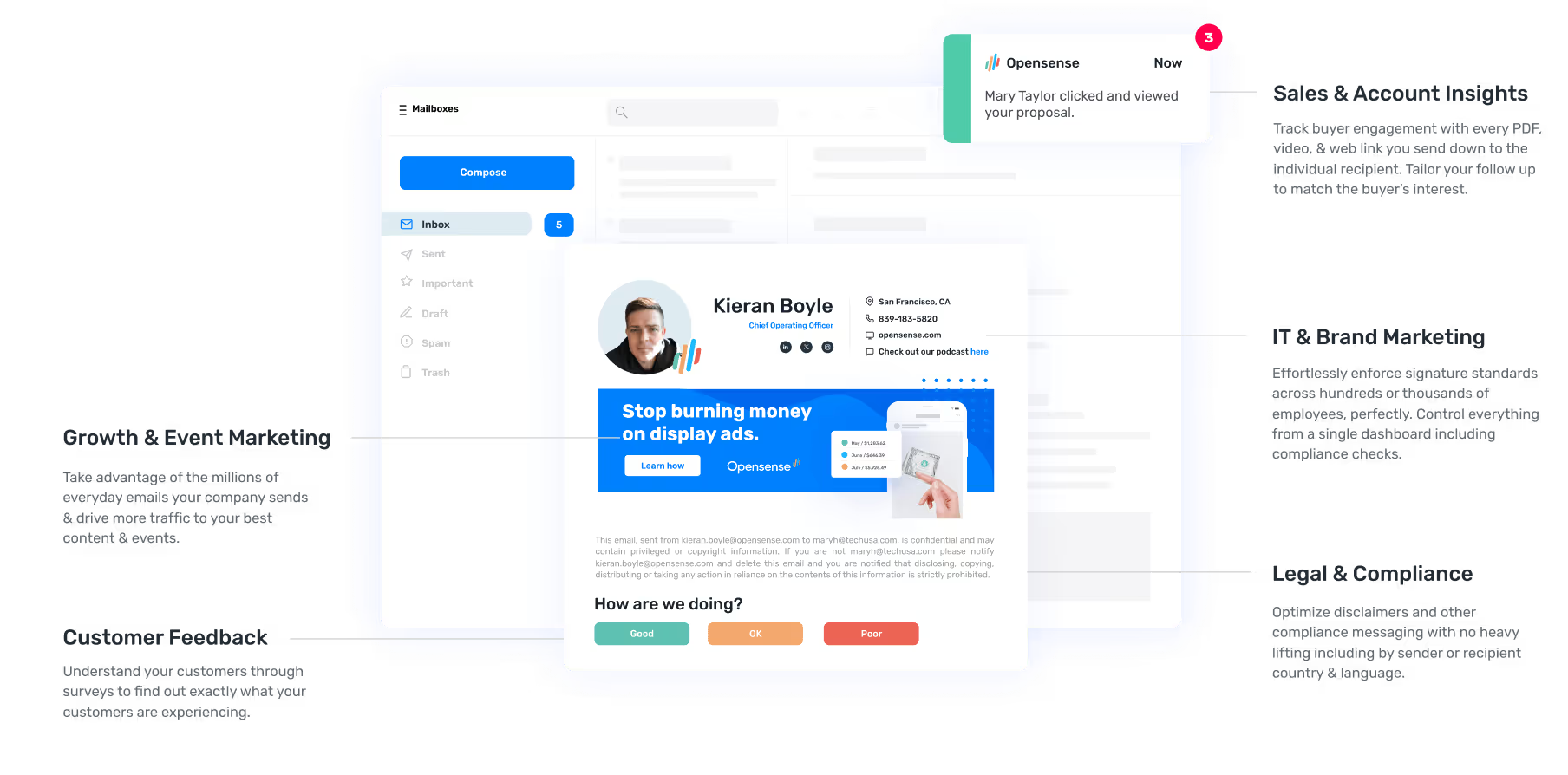
In practice it rarely starts as a compliance initiative. It starts as a brand one. A marketing leader pulls up a dozen employee emails and finds no two signatures alike: different headshots, different fonts, different phone numbers, some with disclaimers and some without.
Meanwhile IT is running the whole thing off a Word document emailed to new hires, or a script that half-applies a signature in Outlook.
What began as "our emails should look consistent" turns into a harder realization. This channel carries more volume than any campaign the firm runs, and nobody controls it.
What Centralized Email Signature Governance Actually Looks Like
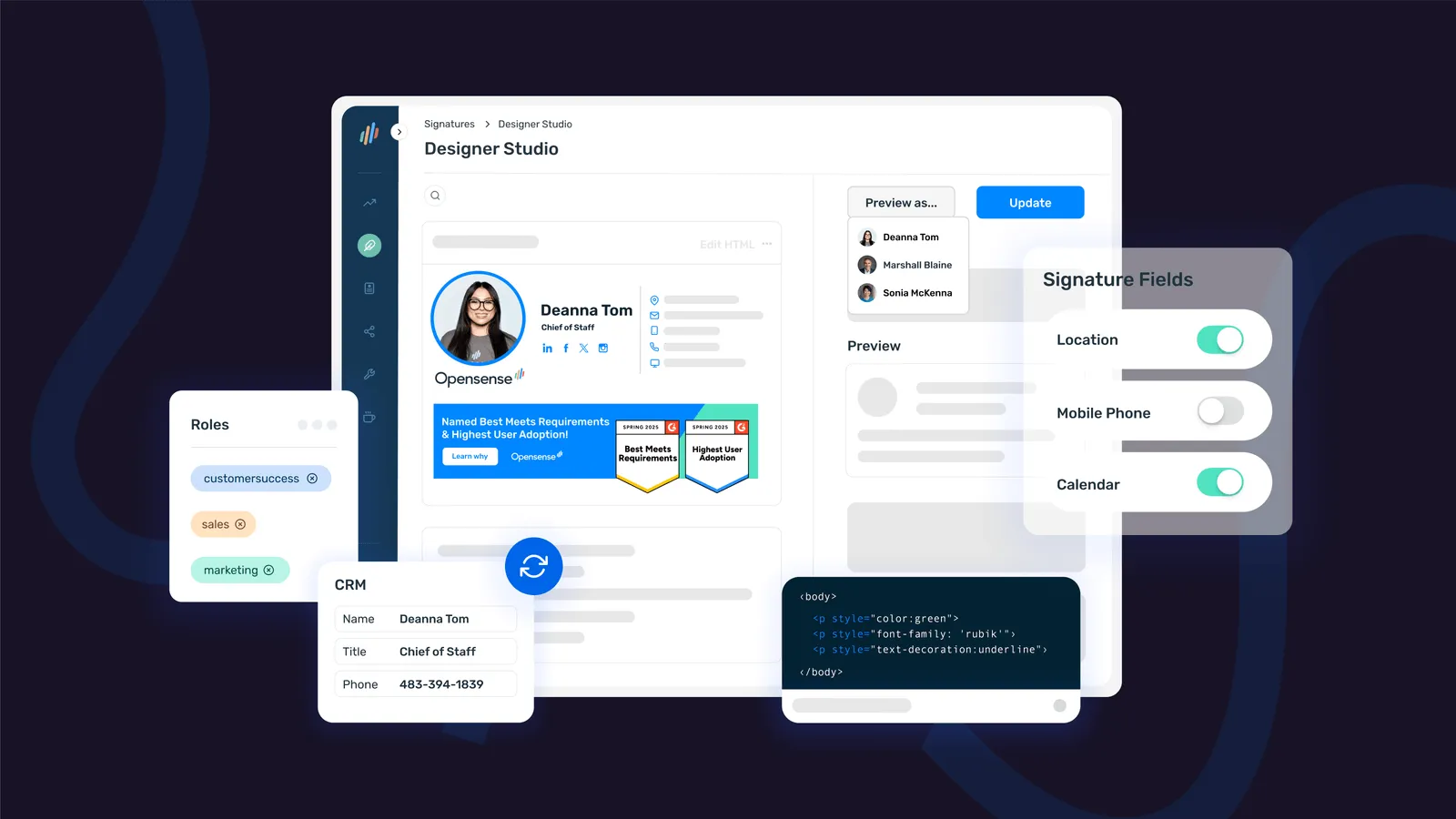
Marketing needs control over brand identity at the employee level, applied centrally and updated instantly, without an IT ticket every time someone gets promoted or changes a phone number.
Compliance needs a defensible posture: opt-out links that work, suppression workflows that run, and disclaimers an employee cannot delete.
Activation comes after that, once the foundation holds. Banners, campaign rotations, event promotion, every employee email turned into a distribution surface without adding send costs or rebuilding the stack. Governance first, activation second, and the order is not negotiable.
There is a version of this that goes badly, and it is worth naming. Firms that start with the banners because banners are the visible part end up with a marketing channel bolted onto an ungoverned foundation, which is a larger compliance surface than they had before.
The institutions building this now are not waiting for a compliance event to force the conversation. They are treating employee email the way they already treat every other governed channel: with standards, with infrastructure, and with a named owner.