
This is a div block with a Webflow interaction that will be triggered when the heading is in the view.
- In today's business climate, compliance management is a top concern for industries that carry higher levels of risk.
- Take the financial services industry, for example, which must adhere to a long list of regulations to ensure that they are operating legally and ethically.
- Failure to comply with these regulations can lead to costly fines, damaged reputations, and even legal action.
- For businesses in these industries, the cost of non-compliance can be significant.
- That's why it's important to understand not only the regulatory burden of your industry but also the cost of mitigating the risk of non-compliance.

In today's business climate, compliance management is a top concern for industries that carry higher levels of risk. Take the financial services industry, for example, which must adhere to a long list of regulations to ensure that they are operating legally and ethically. Failure to comply with these regulations can lead to costly fines, damaged reputations, and even legal action.
For businesses in these industries, the cost of non-compliance can be significant. That's why it's important to understand not only the regulatory burden of your industry but also the cost of mitigating the risk of non-compliance. Like with other types of insurance, companies must weigh the potential cost of non-compliance against the cost of investing in risk management solutions.
One area where risk management solutions are becoming increasingly important is email compliance. With the rise of global teams and customers, email has become a critical business communication tool. However, lacking visibility and control over email content and recipients creates a significant compliance risk for businesses. As a result, there is a growing need for email-based solutions that allow for better control over data collection, content, email gating, and more to prevent non-compliance with current and future privacy regulations.
In this article, we'll dive deeper into the cost of managing compliance relative to the risk of non-compliance and explore the ROI of investing in risk management solutions.
The Cost of Non-Compliance
When it comes to compliance, the cost of non-compliance can be severe, with fines and penalties for non-compliance reaching millions of dollars, and the impact extends even further.
Recent data breach incidents have highlighted the increasing seriousness with which regulators view non-compliance with data protection regulations. For example, Marriott was fined $124 million (later reduced), while Equifax agreed to pay a minimum of $575 million following their 2017 breach. The social media giant Instagram faced the consequences of violating children's privacy under the General Data Protection Regulation (GDPR) when the Irish Data Protection Commissioner (DPC) imposed a fine of $403 million.
But it's not just the immediate financial impact that companies need to consider. The long-term consequences of non-compliance can be just as damaging. Companies can suffer reputational damage, loss of customers, and legal action from affected parties. It's clear that the cost of non-compliance is simply too high for any company to ignore. Will Yang, Head of Growth & Customer Success at Instrumentl said it best, "No matter how you frame it, non-compliance is more expensive than compliance management."
Fortunately, solutions are available to help companies manage compliance risk and avoid the costly consequences of non-compliance. Email-based solutions that allow for better control over data collection, content, and email gating can help prevent non-compliance with current and future privacy regulations. By investing in compliance management, businesses can protect their bottom line and their reputation while also ensuring they're doing their part to protect customer data.
What’s the ROI of Your Reputation?
Compliance management can be seen as an unnecessary expense, but the cost of non-compliance is far greater than that of managing compliance. The cost can be so significant that it can threaten the very existence of a business. But the financial impact is only part of the story. Non-compliance can also lead to long-term consequences such as reputational damage and loss of customer trust.
On the other hand, the benefits of compliance management are clear. Proactive risk management can help businesses avoid costly fines, penalties, and reputational damage from non-compliance. By investing in compliance management, companies can demonstrate their commitment to customer privacy and data protection, which can help build customer trust and loyalty.
And companies across the board recognize this. Just ask Milo Cruz, CMO at Freelance Writing Jobs. "Compliance costs are nothing compared to the charges you'll pay for not adhering to the law. Violating the GDPR can cost your business millions of dollars in fines. Non-compliance also leads to email providers blocking your messages, resulting in lost revenue and decreased customer engagement. You can avoid this by investing in decent email marketing software with an email compliance feature that costs much less than the fines you could face."
When comparing the cost of non-compliance to the cost of compliance management, it becomes clear that the latter is a much more cost-effective solution. While compliance management can involve upfront costs, non-compliance can be far more significant. By investing in compliance management, companies can protect themselves against these potential costs and improve their overall risk management strategies.
The Gap in the Market for Email-Based Compliance Solutions
The higher the risk, the higher the insurance costs—this is common across various industries, including finance and banking. But have you considered the impact of email compliance on these high-risk industries?
Despite these risks, many businesses struggle with managing email compliance effectively. The lack of visibility and control over email content and recipients can make compliance management an uphill battle. Non-compliance with email regulations can lead to serious financial consequences and long-term damage to a business's reputation. That's why there is a growing need for email-based compliance solutions that provide better control over data collection, content, email gating, and more to prevent non-compliance.
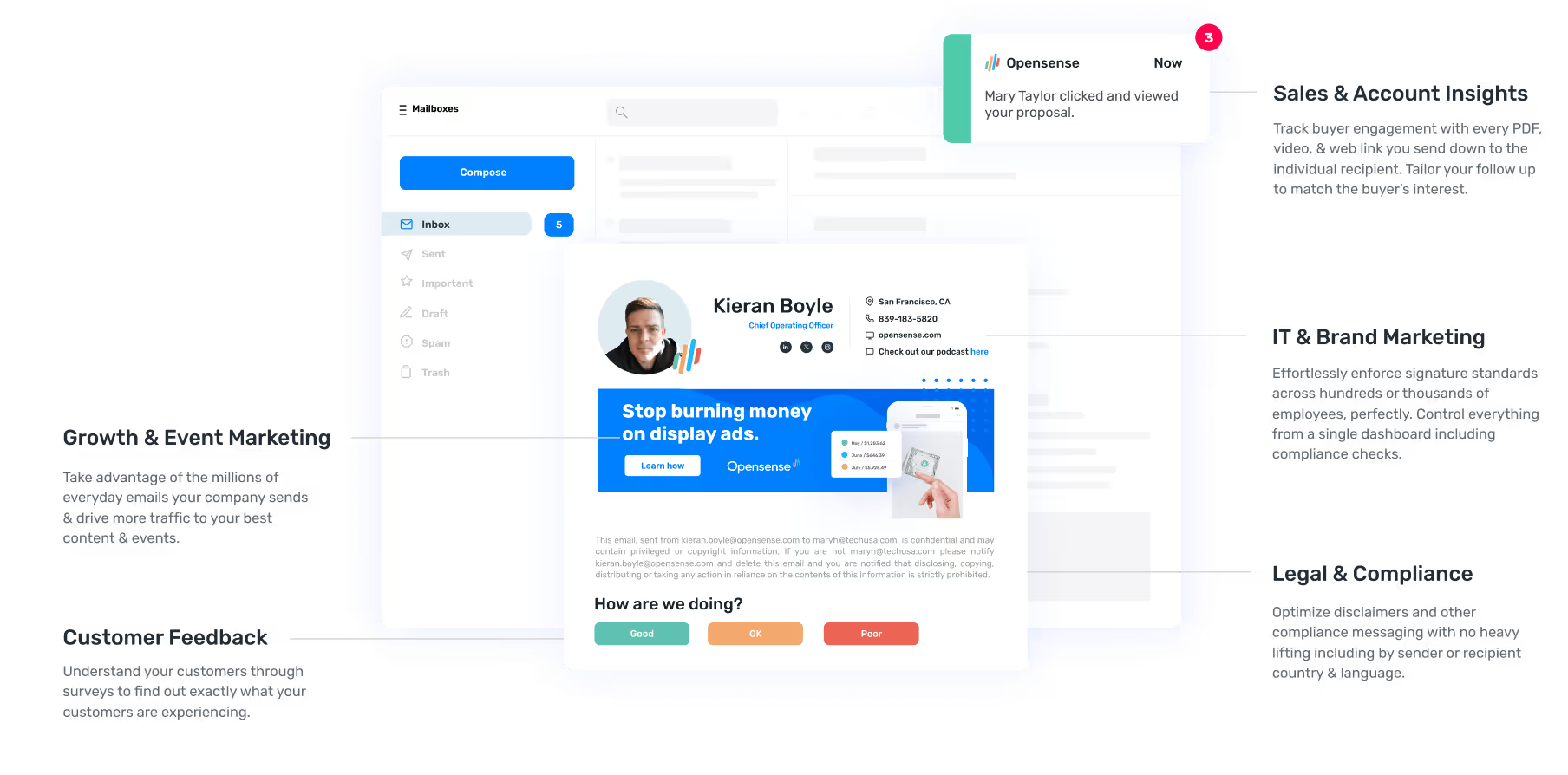
That's where Opensense comes in—bridging the gap in the market for email-based compliance solutions, allowing businesses to avoid costly fines and safeguard their email practices.
The Juice Is Worth the Squeeze in Compliance
It's clear that the cost of non-compliance is significant and can have long-term consequences for businesses. On the other hand, investing in compliance management can seem like an expensive and time-consuming endeavor. However, the ROI of managing the risk of non-compliance far outweighs the cost of fines and penalties, and can ultimately protect a business's reputation and bottom line. So which side would you rather be on?
With Opensense, companies can ensure that their email practices are GDPR-compliant and protected against costly non-compliance. In this case, the juice (compliance efforts) is definitely worth the squeeze (cost of compliance). Don't wait until it's too late—take action now and protect your business with Opensense.